When the door is fine and the opening is not: slab movement and the Lubbock garage
Some of the doors we are called to in Lubbock have nothing wrong with them. They drag on one side, show daylight at one bottom corner, reverse when the limits used to be right, and wear one side's rollers twice as fast as the other, and every one of those symptoms is the garage opening having moved rather than the door. This page is the honest explanation, and it ends with us telling you to call someone who is not a garage door company.
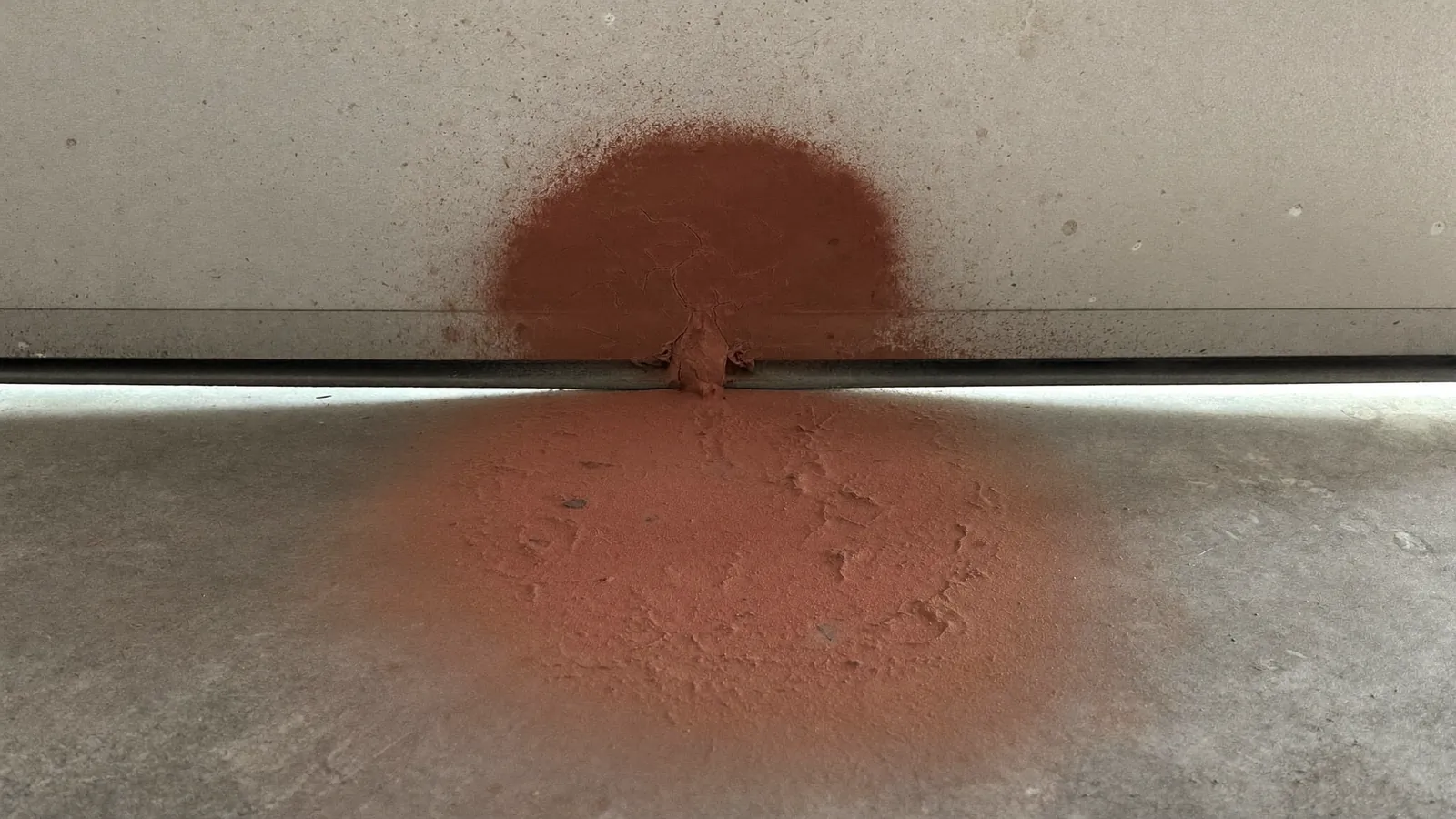
What is under a Lubbock house
Houses on the Caprock are overwhelmingly slab-on-grade, poured directly on the ground, and the ground is shallow soil over caliche, a hard calcium-carbonate hardpan, with clay content in places that swells when it is wet and shrinks when it dries. Eighteen inches of rain a year, arriving in bursts, means the moisture under a slab changes with the seasons, and a slab that is wetter on one side than the other, because of a downspout, a flower bed, a sprinkler zone or a big tree, moves unevenly. It is a small movement, but a garage opening is a wide frame on a long slab, and a small tilt at the slab becomes a visible change at the door.
What it looks like at the door
The door binds or drags on one side, because that side's track is now a fraction closer to the door than it was. There are uneven gaps under the door: it seals at one corner and shows daylight at the other, because the floor has dropped at one end. The opener reverses or stops short, because the travel limits that were set to the old opening no longer match the real one; the door hits the floor on one side before the limit is reached, or the opener reads the binding as an obstruction. And one side's rollers and hinges wear fast, because that side is doing the fighting. A homeowner, reasonably, reads all of that as a door problem, and a garage door company can spend your money on rollers, track adjustments and a new opener without touching the cause.
How to tell
Measure the opening. The technician checks the width at the top and the bottom of the opening and the height at both sides, and measures the diagonals corner to corner; a square opening has equal diagonals. A difference of more than a fraction of an inch, or a floor that reads visibly lower at one jamb, says the frame has moved. Look outside too: cracks in the brick near the garage corners, a step in the driveway where it meets the slab, a crack across the garage floor. Those are the slab telling the same story the door is.
What a door company can do
A small amount of movement can be lived with: the track can be adjusted a little, a taller bottom seal or a threshold closes the gap at the low corner, the limits can be reset to the new opening, and sealed rollers reduce the wear on the fighting side. We will do that, and we will tell you plainly that it treats the symptom. What we will not do is sell you a new door for an opening that will drag the new door too, or keep adjusting the old one every six months as if that were a repair.
What a door company should not do
Fix foundations. That is a different trade with different tools, and the right next step when the opening has moved more than a little is a foundation assessment by someone who does that work, who will tell you whether the slab needs stabilizing or whether the fix is drainage and watering: downspouts extended away from the garage, the ground sloped away, the soaker hose run along the slab edge in a long dry spell so one side does not shrink while the other does not. Once the opening is stable, the door can be set to it properly, and that is when a new door makes sense if one was wanted anyway. We stay in our lane, and we will say which lane the problem is in.
Common questions
My door drags on one side. Is it the rollers?
Maybe. The technician measures the opening first. If the diagonals differ and the floor reads low at one corner, the opening has moved and roller work will not stop it dragging for long.
Can you just adjust the track?
A little, and we will, as a stopgap, while telling you plainly it treats the symptom. Repeated adjustments every few months are not a repair.
Will a new door fix it?
No. A new door hung in an out-of-square opening drags like the old one. Fix or stabilize the opening first, then the door.
Do you do foundation repair?
No. That is a different trade, and the honest advice is a foundation assessment by someone who does it. We will tell you when that is the right call.
Can I do anything myself?
Manage the water: downspouts away from the garage slab, ground sloped away, no beds or sprinklers soaking one side, and a soaker hose along the slab edge in a long drought so the soil does not shrink on one side only.
Is a little daylight at one corner a problem?
Not by itself; a taller bulb seal or a threshold closes it. If the gap grows season to season, the opening is moving and worth measuring.
Related: Track and rollers · Seals · New doors · FAQ