The door goes down, stops and comes back up: what to check, in order
This is the most common garage door complaint in Lubbock and the cheapest to fix, because in most cases nothing is broken. The opener is doing exactly what the safety sensors tell it, and the sensors are telling it something is in the way, and what is in the way is a film of dust. Here is the order to check things in before you call anyone.
First, look at the sensor lights
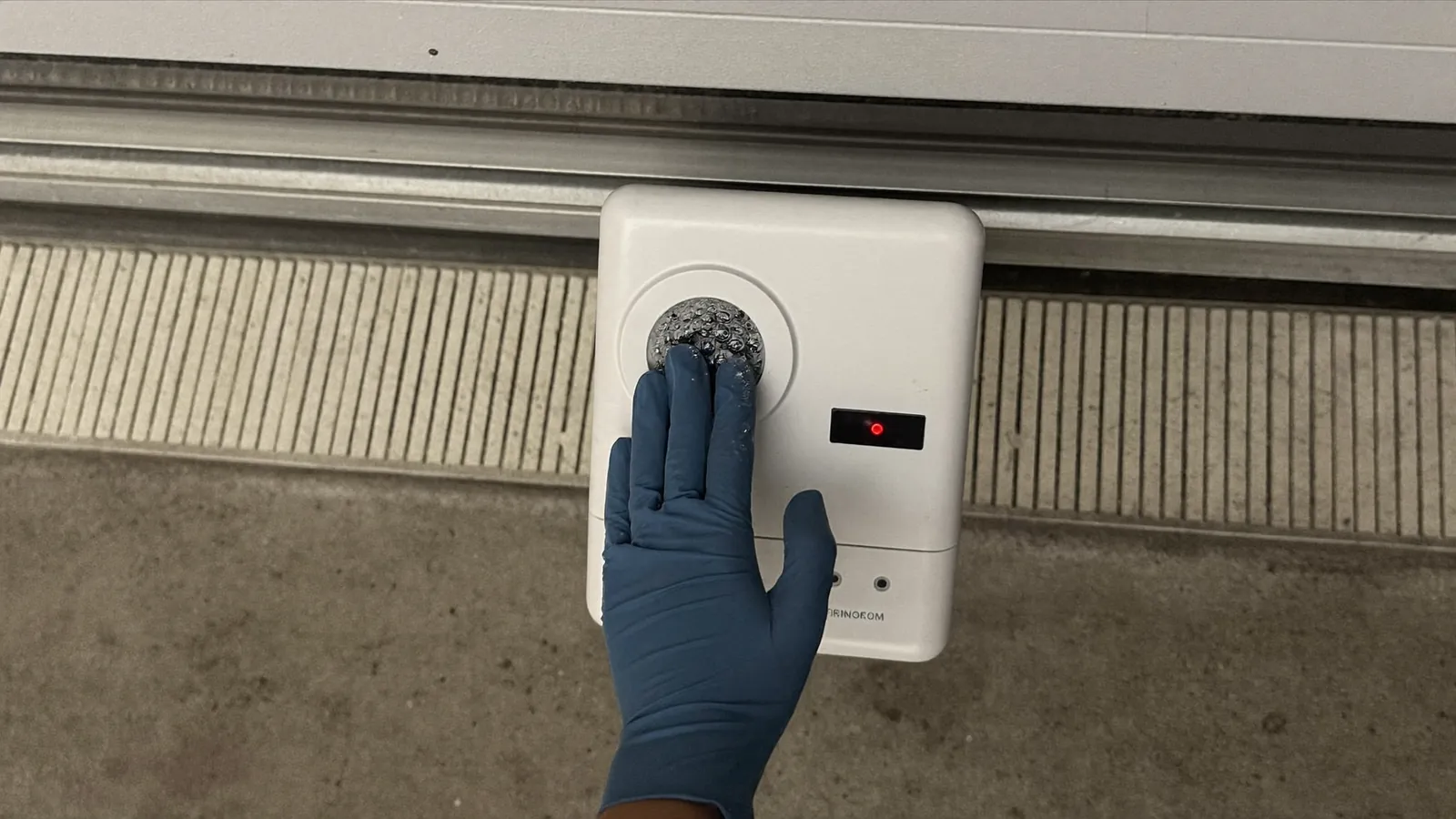
At the bottom of each track, a few inches above the floor, there are two small sensors facing each other, one sending an infrared beam and one receiving it. Each has a small indicator light. Two steady lights mean the beam is good and the problem is elsewhere. A blinking or dark light on one of them means the receiver is not seeing a strong enough beam, and the opener will not close the door, or will close it only while you hold the wall button down, or will start down and reverse. Everything below follows from what those lights do.
Step one: wipe the lenses
In Lubbock this fixes more reversing doors than every other step combined. Wind-blown dust films the lenses; the beam weakens; the opener gives up. Wipe both lenses with a dry soft cloth, then check the lights again. If they go steady, you are done, and you now know to do this after every dust storm.
Step two: look for the sun
If the door misbehaves mostly in the late afternoon, the receiver is probably facing west and taking direct sun through the open door, which overwhelms the beam, especially with a little dust still on the lens. A small shade over the receiver, or swapping the sending and receiving units so the receiver faces east, ends it permanently. The technician can tell at a glance which unit is which.
Step three: check the brackets
The sensors have to face each other exactly, and their brackets get kicked, bumped by trash bins, and knocked by the door itself. If one light is out and the lenses are clean, gently bend or loosen and adjust the bracket until the light comes on steady, then tighten it. If it will not stay, the bracket is bent or the mounting is loose, which is a quick visit.
Step four: look at the wire
Thin low-voltage wire runs from each sensor up the wall to the opener. It gets chewed by rodents, pinched behind storage, pulled loose from the opener terminals and corroded at the splices. A break anywhere along it looks exactly like a dead sensor. If the wire is visibly damaged, that is the fault; if it is not, a technician checks it with a meter in a few minutes.
When it is not the sensors
If both lights are steady and the door still reverses, the opener's close force may be set too low, so that a slightly stiff door reads as an obstruction, or the down limit may be set past the floor, so the door hits the concrete and backs off. Both are adjustments on the opener head. A door that has become stiff, because the rollers are packed with grit or the springs have gone weak, will also trip the force reverse, and in that case turning the force up is the wrong fix; the door needs a roller clean and a balance check. And a door that reverses only on one side's travel, or drags, may be fighting an opening that is no longer square because the slab has moved, which the square guide explains.
Do not do this
Do not tape the two sensors together facing each other on the wall so the opener thinks the beam is always clear. It works, and it removes the one thing that keeps the door from closing on a child, a pet or a bumper. The fix is cheap; do the fix.
Common questions
Both lights are steady but the door still reverses. Why?
Close force set too low, down limit set past the floor, or a door that has become stiff from gritty rollers or weak springs. The first two are adjustments; the third needs the rollers and balance looked at rather than the force turned up.
It only happens in the afternoon.
Sun on a west-facing receiver. A shade or swapping the units so the receiver faces east ends it for good.
I replaced the opener and it still does it.
Because it was never the opener. The sensors, the brackets or the wiring are the fault, and a new opener uses the same ones.
Can I bypass the sensors?
Please do not. They are the only thing that stops the door closing on something. The repair is in the $110 to $200 range.
How often will dust do this?
After a big blow, often. A thirty-second wipe of both lenses after a dust storm prevents most of it.
My old opener has no sensors at all.
Every opener since 1993 has them. Adding a pair is a modest job and brings the door up to the standard it should meet.
Related: Sensor repair · Dust and the door · Opener repair · Tune-up